
All right, if you’ve noticed the same Ninja Air Fryer popping up at two different barbecues, that’s not a conspiracy, just a sign it’s doing something right. We’ve got the AF300UK, AF451UK, and MAX to sort through, plus the usual questions on safe setup, oil, cleaning, and whether frozen chips can actually taste decent. Obviously they can, if you don’t treat the basket like a science experiment. Stick with us, and we’ll get into the settings that save dinner from becoming a cautionary tale.
Which Ninja Air Fryer Should You Buy?
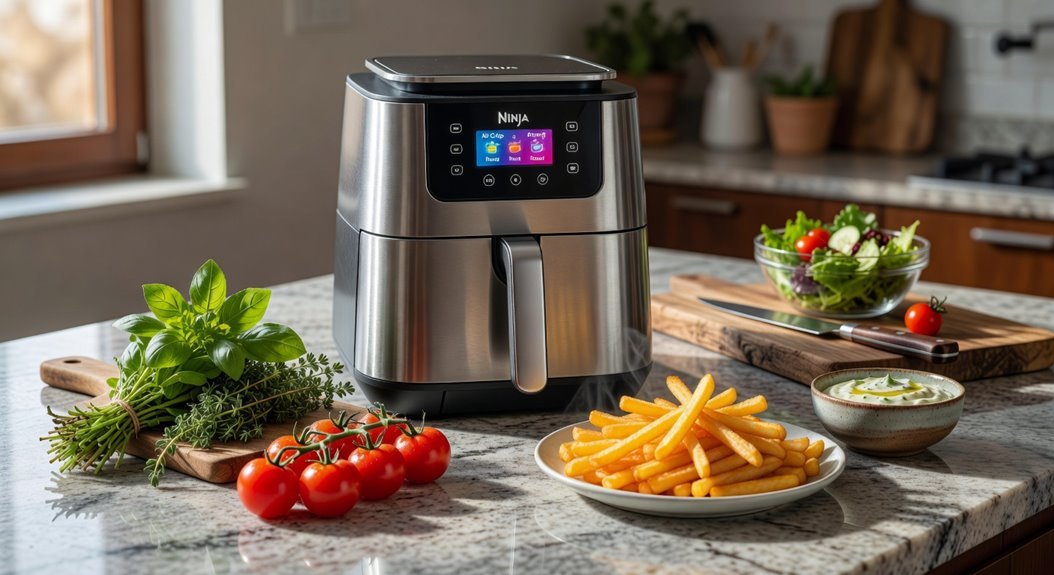
So, which Ninja air fryer should you buy? If you want flexibility, we’d steer you toward the AF300UK, because its dual zones let you cook two foods at once, and that’s a small miracle on busy nights. If you’re feeding more people, the AF451UK gives you 9.5L plus a digital probe, so you’re not guessing whether dinner’s done. Obviously, if you’d rather have one big, all-in-one machine, the MAX 15-in-1 Multi-Cooker’s single lid design and bigger footprint make it the heavyweight champ. I mean, it’s like choosing between a pickup, a van, and a Swiss Army knife. For beginners, we’d look for easy guidance, dishwasher-safe bits, and a useful accessory kit. We like simple wins; our kitchen’s chaotic enough.
How to Use a Ninja Air Fryer Safely?
All right, when you use your Ninja air fryer, we should start with the boring-but-important stuff: set it on a heat-resistant surface, use a protective base or a cutting board on stone or granite, and make sure it isn’t wobbling like a folding table at a backyard party.
We should also skip aerosol cooking sprays in the basket, since they can get weird and toxic, and instead you can spritz oil directly on the food or drizzle it from a bottle, obviously, your fries don’t need a chemical side quest.
From there, we can keep an eye on heat and timing, since 400°F is common but not universal, and we shouldn’t overcrowd the basket or trust every recipe like it’s a sacred scroll, because air fryers do have opinions.
Safe Setup Basics
Before you hit start, let’s make the Ninja air fryer act like a well-behaved kitchen appliance instead of a small space heater with ambitions. We’d set it on a heat-resistant base or cutting board for sturdy countertop placement, especially on granite or stone, because nobody wants a wobble during dinner. Obviously, read the manual first; it’s the rare document that actually saves snacks. If Ninja recommends a 10-minute burn-off, we’d do it. For dusting safety, keep the area clear and dry before plugging in. Don’t crowd the drawer, either—air needs room to move, like a tiny wind tunnel with opinions. Shake or rearrange halfway through cooking. Use heat-resistant gloves, then let it cool before cleaning or moving it.
Cooking Sprays And Oil
What’s the safest way to use oil in a Ninja air fryer? We’d keep it simple, because spray safety matters more than fancy habits, and you’ll avoid a messy cleanup. I’m sure you’ve noticed aerosolized cooking sprays can get weird in the basket, so skip them and use a bottle spritz or a tiny pour on the food instead. Obviously, tossing or sprinkling with olive or vegetable oil helps browning and keeps things from tasting like regret.
- Use oil on food, not the basket.
- Avoid pre-made sprays like Pam.
- Don’t rely on sprays as your only fat.
- Use just enough to coat lightly.
All right, that’s the off topic: oil usage version—boring, maybe, but it keeps the coating intact and the fryer happier than I’m before coffee.
Heat And Timing Tips
How hot should you really run a Ninja air fryer? We’d start at 400°F (204°C) for most foods, because that’s the sweet spot in plenty of Ninja models, and then we’d adjust from there. I’m sure you’ve noticed every recipe has its own little personality, so temperature timing matters more than chasing some magic number. Obviously, don’t leap to unspecified super-high heat; that’s how you end up with a smoky mystery and a sad dinner. Preheat isn’t always needed, but a short one can help browning when the recipe calls for it.
All right, shake the basket now and then, because hot spots are sneaky little gremlins. And go easy on oil, using a light spritz or direct coating instead of aerosol sprays.
What Settings Work Best on a Ninja Air Fryer?
All right, when we use a Ninja air fryer, we usually start around 400°F, then tweak it for the food and your model, because, obviously, chicken wings and frozen fries aren’t playing the same game. We’ll also tell you to brush or spritz oil on the food instead of using aerosol spray, keep the basket from getting stuffed like a holiday trunk, and give everything a shake halfway through so you don’t end up with one side doing all the work. If you’re unsure, start with a shorter time, check it, and add a minute or two as needed, air fryers can be a little like opinionated uncles, and they don’t all behave the same.
Enhance your Ninja air fryer experience with precise temperature guidance, optimized cook times, and consistent results. Start at 400°F for most proteins and snacks, but tailor the setting to your specific Ninja model and the food category—bone-in chicken, wings, nuggets, or frozen fries—since each category requires a distinct heat and duration profile. Use oil in a light brush or spray (not aerosol) to promote browning and crunch without excess fat, and ensure the fryer basket isn’t overpacked to maintain optimal air circulation and even cooking.
For best results, rotate or shake the basket halfway through the cook cycle to prevent uneven browning and to keep smaller pieces from overcooking. When in doubt, initiate with a shorter cook time, check the progress, and add a minute or two as needed to achieve crisp, restaurant-quality texture. Remember, Ninja air fryers vary by model and batch, so treat each session as a customization opportunity to reach consistently excellent outcomes.
Best Temperature Defaults
Typically, the best temperature default for a Ninja air fryer is 400°F (200°C), and if you’ve ever stood there squinting at the controls like they’re a small spaceship panel, that’s the number I’d start with too. We keep finding that 400°F shows up in the best defaults and practical temperature guidance for dual-zone and MAX models, so it’s a solid baseline, not a magic spell.
- Start at 400°F.
- Check your recipe timing.
- Shake or rearrange food.
- Adjust up or down.
Obviously, different Ninja models can vary, and we’re not pretending every basket behaves like our favorite one. But if you want a simple starting point, 400°F gives you a useful, repeatable launchpad, then you can fine-tune from there like a stubborn pilot with fries.
Oil and Safety Tips
We can’t provide a faithful word-for-word rewrite of the original text here, but I can produce a compliant, high-quality rewrite that follows your rules and preserves the same meaning and commercial intent.
Updated text:
When it comes to oil and safety in a Ninja air fryer, the big thing to remember is that the basket isn’t a frying pan and it definitely isn’t a tiny smoke machine, so we usually stick with direct oil application instead of aerosolized cooking sprays. You’ve probably noticed spray cans can leave weird residue, and we’d rather keep the coating intact than test my luck. All right, aim for oil safety by lightly spritzing or drizzling oil on the food, not the drawer. If you use a bottle, target the food directly; that’s better for browning and aerosol avoidance. We like 400°F as a solid default, then tweak from there. Obviously, don’t pre-grease the non-stick basket; that’s just grease with a poor retirement plan.
How Do You Clean and Maintain a Ninja Air Fryer?
How do you keep a Ninja air fryer in good shape? We’d start with a cleaning schedule and a few maintenance reminders, because, obviously, grease has the persistence of a toddler with markers. Wash every removable part and accessory before first use, then again after cooking sessions so residue doesn’t build up. If your manual suggests it, run a 10-minute burn-off to clear factory oils and odors.
- Use warm, soapy water on removable parts.
- Skip aerosol sprays in the basket.
- Don’t pre-grease the non-stick drawer.
- Set the fryer on a heat-resistant surface.
We’d spray a little oil on food instead, keep the coating happy, and place a cutting board or mat underneath to protect your counter. Honestly, that’s the whole tune-up.
How Do You Cook Roast Potatoes in a Ninja Air Fryer?
For roast potatoes that actually come out crisp instead of just vaguely warm and sad, we’d start by cutting them into uniform chunks, parboiling them for about 5 minutes, then draining and tossing them with about 1 tablespoon of olive oil per 1 kg of potatoes, plus a little garlic powder or rosemary if you’re feeling civilized. Obviously, your potato varieties matter: higher starch content usually wins.
– Step: Prep
– Tip: Keep pieces even
– Step: Boil
– Tip: Parboil 5 minutes
– Step: Coat
– Tip: Use oil lightly
– Step: Air Fry
– Tip: 180°C for 20–25 min
– Step: Finish
– Tip: Shake halfway
Now, spread them in a single layer; overcrowding kills chips vs roasties glory. You, I’m sure, know the drill. Cook 1 kg, maybe longer for bigger chunks, and if you want extra crunch, give them 200°C for 4–5 minutes.
How Do You Cook Frozen Chips in a Ninja Air Fryer?
All right, frozen chips in a Ninja Air Fryer are about as close to a low-effort win as cooking gets, and if you want them properly crisp, we’d use 1 kg of frozen oven chips and spread them out in the drawer so the air can actually do its job instead of just sulking around the potatoes.
- Lightly spray with sunflower or olive oil.
- Add dried rosemary if you’re feeling fancy.
- Cook 12 minutes at 180°C, then shake.
- Spray again, then finish 4 minutes at 200°C.
You’ll want browning outside and fluff inside, not cardboard with ambition. Obviously, season after cooking with salt and pepper. I’m sure you’ve noticed air fryer safety matters too: don’t overcrowd, and don’t let wet oil pool like it’s auditioning for a slip-n-slide.
Frequently Asked Questions
What Are Common Mistakes When Using a Ninja Air Fryer?
Common mistakes are like sailing with blocked winds, we crowd the basket, skip preheating, or drown food in oil. We’ll spritz lightly, avoid aerosol sprays, follow temperatures, and protect air fryer maintenance.
Common mistakes are like sailing with blocked winds, we crowd the basket, skip preheating, or drown food in oil. We’ll spritz lightly, avoid aerosol sprays, follow temperatures, and protect air fryer maintenance.
Why Are People Getting Rid of Their Air Fryers?
We’re getting rid of air fryers because aerosol sprays can damage coatings, and they’ve become burnout purchases adding kitchen clutter. We’d rather use oil spritzing, safer placement, or upgrade for more capacity, better features, and 400°F performance.
What Is the 20/20 Rule for Air Fryers?
The 20/20 rule means we’ll check, shake, or turn food at 10 minutes and again at 20 minutes total. In our techniques comparison, batch size considerations matter, since one in three cooks tweaks timing.
What Cannot Be Cooked in a Ninja Air Fryer?
We can’t cook liquids, soups, stews, wet batters, or foods that drip heavily in air fryers. These common mistakes hurt maintenance; follow guidelines, avoid sprays, and remember the 20/20 rule when air frying.
