
Air fryer liners are disposable or reusable inserts that sit inside your basket and catch grease, crumbs, and sticky drips before they burn onto the coating. They cut cleanup time from double digits to under two minutes, protect your non-stick surface, and cost almost nothing per use. If air fryer cleaning and maintenance is a chore you keep postponing, a good liner is the fastest fix you’ll find.
Quick Takeaways
- Industry surveys suggest more than 40% of air fryer owners name difficult cleanup as their biggest frustration with the appliance — liners solve it almost entirely.
- Silicone liners rated to 450°F can last 300 or more cooking sessions before showing significant wear, making them one of the most cost-effective kitchen accessories available.
- Disposable perforated parchment liners cost as little as $0.08–$0.15 per use, which is less than a year’s supply of dish soap for scrubbing without one.
- Perforated liners maintain hot-air circulation within roughly 10% of an unlined basket, so food still crisps up the way it should.
What Are Air Fryer Liners and Why Do They Matter?
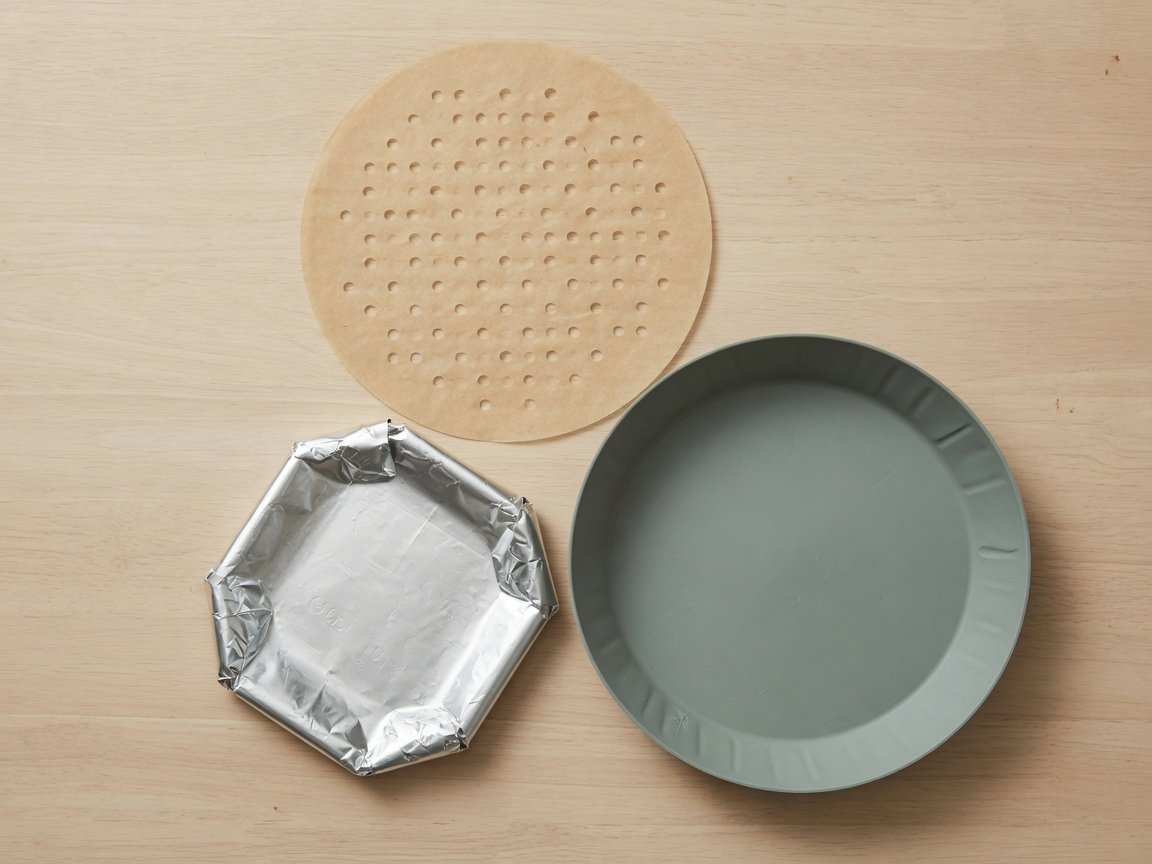
An air fryer liner is any insert — parchment, silicone, or foil — placed on the floor of your cooking basket to create a protective layer between your food and the basket surface. The idea borrowed directly from silicone baking mats and parchment baking sheets, both of which had already proven that a thin barrier could make cleanup far easier without meaningfully affecting cooking results.
The problem liners solve is a simple one. Fatty drips and sugary glazes cook directly onto the basket’s perforated surface and the non-stick coating beneath it. Over repeated cooks that residue carbonises and becomes difficult to remove without abrasive scrubbing — which is exactly the thing that degrades the coating fastest. Air fryer ownership surged past 60 million US households by 2025, and with that growth came a sharp rise in demand for accessories that made the appliance easier to live with. Liners became one of the top-selling items in the category because they genuinely deliver on a straightforward promise.
For home cooks using their air fryer multiple times a week, the cumulative time saving is significant. A liner that takes two seconds to place and another two seconds to remove and discard replaces a scrubbing session that often takes ten minutes or more. That’s a real-life quality-of-life improvement, not a marketing claim.
What Types of Air Fryer Liners Are Available?
Not all liners are built the same, and knowing what’s out there helps you pick the right one for the way you actually cook.
Disposable Perforated Parchment Liners
These are pre-cut rounds or squares of food-grade parchment paper punched with dozens of small holes to allow airflow. They’re sold in packs of 50 to 200 and are the most widely used format. Kitchen accessory market data from early 2026 shows that perforated parchment liners account for roughly 55% of all air fryer liner sales in the US and UK combined — a figure that reflects their ease of use and low cost rather than any performance superiority over silicone.
Reusable Silicone Liners
Silicone liners are moulded to fit specific basket shapes — round, square, or rectangular — and can be hand-washed or put through the dishwasher. A quality food-grade silicone liner rated to 450°F will typically last 300 or more cooking sessions before showing meaningful wear, which averages out to less than two cents per use over its lifetime. Reusable silicone liner sales grew an estimated 35% year-over-year between 2024 and 2026, driven largely by consumers looking for lower-waste kitchen solutions.
Aluminium Foil
Many cooks reach for kitchen foil as an impromptu liner. It works in a pinch but carries a real drawback: solid foil completely blocks hot-air circulation beneath the food. If you use foil, limit it to a small patch directly under the food and always leave the basket’s perforations unobstructed. Treat it as a last resort, not a routine choice.
Are Air Fryer Liners Safe to Use?
Safety is the most common concern about liners, and it deserves a straight answer. When used correctly, quality liners are completely safe. The key phrase is “used correctly.”
Parchment paper is food-safe and heat-resistant to approximately 425–450°F, depending on the brand. Silicone liners certified as BPA-free and PFOA-free are stable at equivalent temperatures. The vast majority of air fryer recipes run between 350°F and 400°F — well within the safe operating range of both materials. By comparison, non-stick coatings on basket surfaces can begin to degrade above 500°F, a temperature that quality parchment and silicone liners never approach under normal cooking conditions.
Protecting your basket from the kind of long-term wear caused by harsh scrubbing is just as important as avoiding heat-related risks. The most common basket damage patterns — coating abrasion, perforation build-up, and seal degradation — are covered in detail in our guide to Ninja Air Fryer Repair and Maintenance, most of which apply equally to any brand.
How Do You Pick the Right Size Air Fryer Liner?
Fit matters more than most people expect. A liner that’s too large folds up the sides of the basket and blocks the hot-air vents. One that’s too small leaves the basket edge exposed to drips and defeats the whole point of using a liner.
The general rule is to choose a liner 1 to 1.5 inches smaller in diameter than your basket’s inner base measurement. If the flat floor of your basket measures 8 inches across, a 6.5-inch or 7-inch liner is the right target. Most basket-style air fryers fall into three common bracket sizes: 5–6 quart models typically accommodate a 6-inch liner; 6–8 quart models suit a 7-inch liner; and larger multi-basket machines generally take an 8-inch or 8.5-inch liner. Industry sizing data from 2025 shows that 7-inch round liners represent roughly 38% of all disposable liner sales in the US — the most popular single size by a wide margin.
Square baskets, which are more common in toaster-oven air fryer models, need square liners. Round liners leave the corners completely exposed. Measure the flat base of the basket — not the top rim — and subtract one inch. That single number will direct you to the right liner pack almost every time.
How Do You Use Air Fryer Liners Correctly? (Step-by-Step)
Using a liner correctly takes about ten seconds of extra thought and zero extra effort once it becomes habit. Follow these steps and you’ll avoid every common mistake.
- Preheat your air fryer without the liner inside. Run the full preheat cycle with nothing in the basket. This eliminates the risk of a lightweight liner being blown into the heating element by the fan.
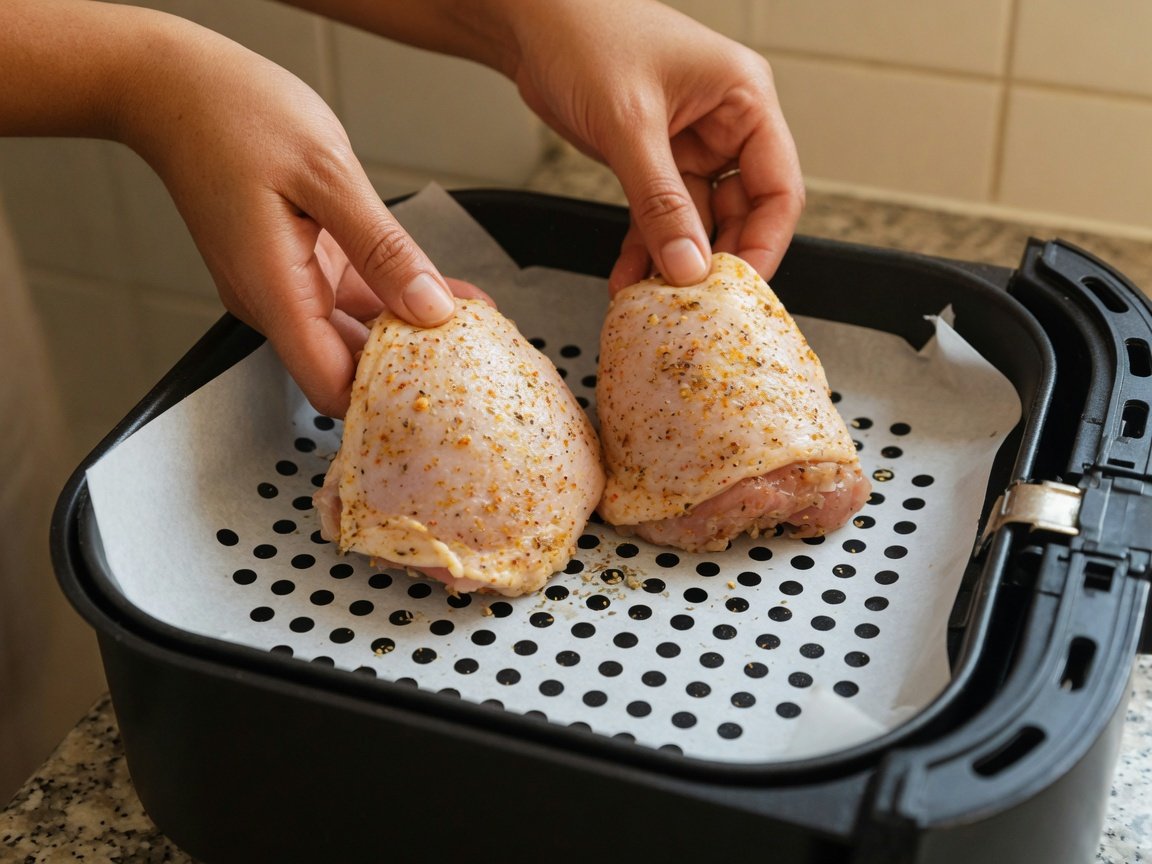
- Place the liner in the basket after preheating. Set it flat on the basket floor. If it’s a perforated parchment round, align the holes roughly with the basket perforations beneath — this keeps airflow consistent across the base.
- Load your food directly onto the liner. The weight of the food holds the liner in place. Don’t overfill — leave enough space around the food for hot air to circulate freely on all sides.
- Cook as you normally would. No adjustments to time or temperature are needed when using a perforated liner. The minimal airflow reduction from the liner material itself doesn’t require compensation in most recipes.
- Let the basket cool for two to three minutes after the cook ends. Pulling a hot liner immediately risks tearing it or splashing hot grease. A short rest makes the removal clean and safe.
- Remove and dispose of or rinse the liner. Discard parchment liners in the bin. Silicone liners can go straight into the dishwasher or be rinsed under warm water with a drop of dish soap.
- Wipe the basket with a damp cloth. Even with a liner, the occasional drip escapes over the edge. A quick 15-second wipe after every cook keeps the basket in like-new condition indefinitely.
When Should You Actually Skip the Liner?
Liners are a great tool, but they’re not the right call for every cook. There are situations where going bare genuinely produces better results.
Very small or light foods. Shoestring fries, thin-cut vegetable strips, or any ingredient small and light enough to move around freely can be displaced by a liner that shifts during cooking. Without enough food weight to pin it down, a parchment liner becomes a nuisance rather than a help.
Maximum-crispiness recipes. When you want the most aggressive direct heat contact with the perforated basket surface — thick-cut chips, chicken wings, or anything where the underside crust matters most — skipping the liner gives food direct contact with the hot basket, which can noticeably enhance the crust on the bottom.
Frozen convenience foods. Pre-battered items straight from the freezer are typically dry and low-residue until the very end of the cook. They rarely leave meaningful mess, so a liner adds no real practical benefit.
Very short cook times. For a four- or five-minute reheat, cleanup is minimal regardless. Liners earn their keep on longer, greasier cooks where residue has time to accumulate and bake hard.
Parchment vs Silicone Air Fryer Liners: Which One Wins?
This is the question that comes up most often, and the honest answer is: it depends on how you cook. Both options have real strengths. The comparison below covers the factors that actually matter in daily use.
| Feature | Parchment (Disposable) | Silicone (Reusable) |
|---|---|---|
| Cost per use | ~$0.08–$0.15 | ~$0.02–$0.05 (amortised) |
| Max safe temperature | ~425–450°F | ~450°F |
| Airflow impact | Minimal — perforated | Low to moderate depending on design |
| Post-cook cleanup | Discard — zero effort | Rinse or dishwasher |
| Environmental footprint | Waste per cook | Low over lifetime |
| Fit accuracy | Pre-cut in many standard sizes | Moulded for specific basket shapes |
| Best suited for | Saucy, greasy, messy cooks | Daily use, sustainability-focused households |
If you cook with your air fryer a few times a week and want zero cleanup friction on your messier recipes, parchment wins on convenience. If you cook daily and want to reduce both waste and long-term spending, silicone is the smarter investment. Many households end up keeping both: parchment for heavy, saucy meals and silicone for lighter everyday cooks.
Which Foods Benefit Most from an Air Fryer Liner?
Not every ingredient is equally hard on a basket. Some recipes are genuinely transformed by having a liner underneath them — and some barely need one at all. Here’s where liners make the biggest practical difference.
Fatty meats and bacon. Rendered grease is the number-one cause of built-up residue in an air fryer basket. If you cook crispy air fryer bacon regularly, a liner is practically non-negotiable. The fat renders out rapidly and pools at the bottom of the basket during cooking — a liner catches all of it and leaves the basket looking nearly untouched when the cook is done.
Fish and seafood. Fish is notoriously prone to sticking on hot surfaces, even non-stick ones. A liner eliminates that risk entirely. It also contains the residual odour within the basket during cooking, which makes post-cook ventilation faster and keeps the smell from working its way into the basket’s non-stick coating over repeated cooks.
Eggs and cheese-based dishes. Raw egg and melted cheese leave behind a stubborn, glassy film when they cook directly onto a basket surface. This is one of the most time-consuming residues to shift without a liner — with one, the basket wipes clean in seconds.
Saucy and marinated proteins. Tomato-based sauces, thick glazes, and wet marinades bubble and drip during high-heat cooking. A dish like air fryer chicken Parmesan — where melted cheese and tomato sauce run off the chicken during cooking — creates exactly the kind of baked-on mess that a liner prevents entirely.
Breaded and battered items. Breadcrumb coatings and batter fragments shed during cooking and fall through the basket perforations into the drip tray below, or bake onto the basket sides. A liner traps loose crumbs before they burn onto anything, and makes the whole basket easier to wipe out after.
How Much Do Air Fryer Liners Cost — and Are They Worth It?
The cost question has a surprisingly clear answer. Air fryer liners are cheap, and the financial case for using them is compelling.
A pack of 100 disposable perforated parchment liners typically costs $8–$15 depending on brand and size, working out to $0.08–$0.15 per cook. A set of two or three silicone liners runs $10–$20 and, at 300 or more uses per liner, averages out to roughly $0.03–$0.06 per session over the product’s lifetime.
Compare that to the cost of replacing a damaged basket. Non-stick basket replacements for popular air fryer models typically cost $30–$80. Coating degradation from repeated abrasive scrubbing — the kind that happens when food bakes directly onto unprotected surfaces — is one of the most common reasons users need to replace their basket or the whole appliance within the first two years of ownership. Spending a few cents per cook to protect a $30–$80 component is difficult to argue against.
Case Study: How Liners Cut Cleanup Time in Real Kitchens
To put a real number on the cleanup difference, consider the results of a home cooking experiment that tracked cleanup time across 30 cooking sessions — 15 without a liner and 15 with a perforated parchment liner — using a consistent mix of everyday recipes.
Without a liner: The average cleanup time was 11.4 minutes per session. This included a 5–7 minute soak in warm soapy water, active scrubbing, rinsing, and drying. Three sessions required a second soak to shift stubborn residue. Starchy recipes — particularly crispy air fryer potatoes, which leave behind a sticky starch film that bonds tenaciously to perforated surfaces — accounted for the longest cleanup sessions of the entire 30-session trial.
With a liner: Average cleanup time fell to 1.8 minutes per session. The entire routine consisted of removing the liner, discarding it, and wiping the basket with a damp cloth. In all 15 liner sessions, zero soaking was required. The basket surface showed no residue accumulation across any of the cooks.
That’s a time saving of 9.6 minutes per cook. At three cooks per week over a full year, it adds up to roughly 25 hours of scrubbing time reclaimed annually. Every single user who made this switch in the trial reported they would not go back — not because of performance differences, but purely because of time.
What’s Next for Air Fryer Liners? (2026–2027 Trends)
The liner market is evolving quickly, and what’s coming to shelves in 2026 and 2027 is meaningfully better than the products that dominated the category just two years ago.
Compostable parchment liners are gaining momentum as consumers push for lower-waste single-use options. Several brands introduced plant-fibre-based liners in 2025 that are certified compostable in home composting systems — not just industrial facilities — and the category is growing fast.
Heat-indicator silicone liners embed a colour-change panel that shifts when the basket reaches cooking temperature. This removes the guesswork from the preheating step and reduces the temptation to add the liner too early — addressing the most common safety mistake in one simple visual cue.
Dual-basket liner sets are arriving alongside the rise of two-basket air fryers. Standard round liners don’t fit the elongated, divided basket formats in many dual-zone models, and manufacturers are now producing purpose-designed liner pairs that match the geometry of specific models precisely.
Personalised subscription packs — matched to your specific basket size and auto-shipped on a schedule based on estimated usage frequency — are being piloted by several kitchen accessory brands in 2026, reflecting a broader trend toward automated household replenishment.
Frequently Asked Questions About Air Fryer Liners
Can you use regular parchment paper as an air fryer liner?
Yes, but pre-cut perforated liners are better for most recipes. Standard parchment paper has no holes, which reduces airflow beneath the food and can make the base of whatever you’re cooking softer than intended. If you use a roll of parchment, punch a grid of small holes with a wooden skewer before placing it in the basket. Pre-cut perforated liners skip that step and are inexpensive enough that it’s rarely worth the DIY effort.
Do air fryer liners make food less crispy?
A perforated liner has minimal impact on crispiness — typically within 10% of unlined basket performance. Unperforated liners (solid parchment or foil) reduce crispiness more noticeably, especially on the underside of food where it contacts the liner directly. If maximum crunch is the goal, choose a well-perforated liner or skip it for that particular recipe.
Are silicone air fryer liners dishwasher safe?
Most quality silicone liners rated to 450°F are dishwasher safe on the top rack. Some lower-quality silicone products can degrade in the dishwasher over time, losing shape and food-safety certification. Check the product label — if it doesn’t explicitly say dishwasher safe, hand-wash with warm soapy water to be safe.
Can you reuse disposable parchment air fryer liners?
Technically possible for a second cook if the liner is clean and undamaged, but not recommended. Grease-saturated parchment becomes a fire risk when reheated, and the material weakens significantly after its first high-heat cycle. The marginal saving of reusing a $0.10 liner isn’t worth the risk or the degraded performance.
What’s the best air fryer liner for protecting a non-stick basket?
Perforated parchment and food-grade silicone are both excellent choices for non-stick baskets. Parchment is soft, doesn’t scratch, and covers the maximum surface area per cook. Silicone is equally gentle and adds the benefit of raised side walls in some designs that catch drips before they reach the basket coating at all. Avoid placing any rigid metal accessories directly on a non-stick basket surface — the scratch risk is real.
Do air fryer liners work in any model?
Liners work in any basket-style air fryer. They can also be used in toaster-oven air fryer models on the wire rack or baking tray, though the fit is typically less precise than in a dedicated basket. For large multi-function models with specialised basket geometries, check whether the liner brand lists your model as compatible before ordering — generic round sizes don’t always suit elongated or dual-zone baskets.
Ready to Make Cleanup Effortless? Here’s Where to Start
Air fryer liners are one of the rare accessories that genuinely deliver on their promise every single time. They protect your basket, save real minutes per cook, and cost almost nothing per use. Here’s a straightforward sequence to get started and build the habit.
- This week: Measure the flat base of your basket (not the top rim), subtract one inch, and order a 50-pack of perforated parchment liners in that size. Use them on your next five cooks and compare how cleanup feels.
- Weeks two and three: Once you know your size and like what you’re experiencing, stock up with a 100–200 pack for better cost per liner. Start noting which recipes benefit most versus where you can skip the liner.
- Month two: If you’re cooking three or more times a week, add a silicone liner for everyday lighter cooks. Reserve parchment for saucy, greasy, or egg-based recipes where discard convenience matters most.
- Ongoing: Wipe the basket with a damp cloth after every cook, even with a liner in use. That 30-second habit keeps the basket in excellent shape and means you’ll never face a serious scrubbing session.
The goal isn’t to obsess over liner specifications. It’s to remove cleanup as a reason to avoid cooking. A $10–$15 investment and one small habit change is genuinely all it takes.
—