
You probably don’t know that air fryer capacity affects more than batch size, since bigger baskets can mean slower preheating and a chunkier footprint, which matters when you’re crowding a small kitchen like it’s a family reunion. All right, if you’re cooking for one or two, we usually like 1.5 to 5 quarts; for four people, you’re often better off at 5.5 quarts or more. And yes, the right size can be the difference between crispy fries and sad, steamed optimism.
You probably don’t know that air fryer capacity affects more than batch size, since bigger baskets can mean slower preheating and a chunkier footprint, which matters when you’re crowding a small kitchen like it’s a family reunion. All right, if you’re cooking for one or two, we usually like 1.5 to 5 quarts; for four people, you’re often better off at 5.5 quarts or more. And yes, the right size can be the difference between crispy fries and sad, steamed optimism.
What Size Air Fryer Do You Need
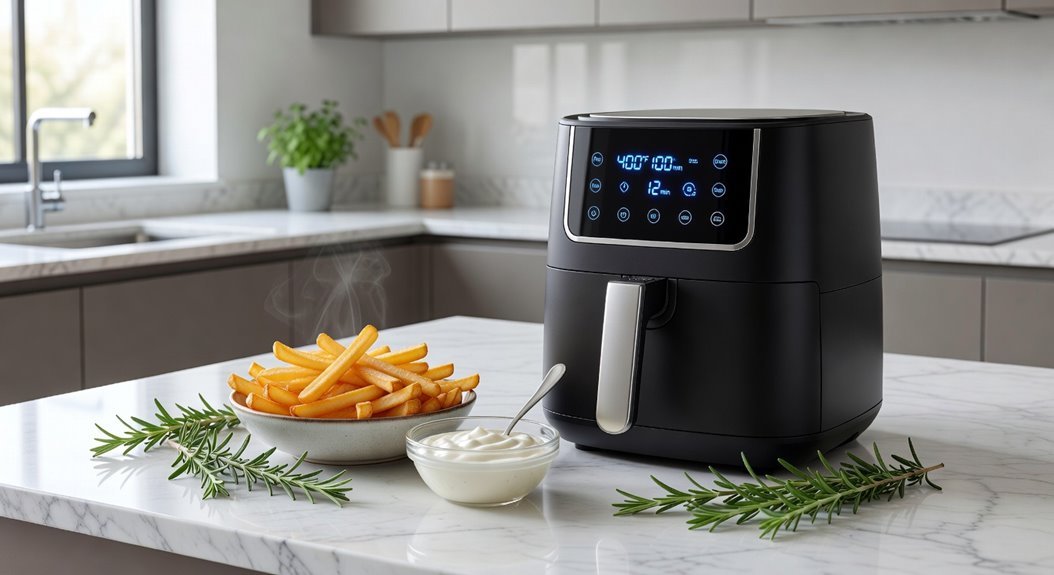
How big should your air fryer be? Well, you and I should start with how many mouths you’re feeding. For solo cooking, we’d pick 1.5–3 liter compact units, they save counter space, heat fast, and, obviously, lean into better energy efficiency.
For two people, a 3.5–5 liter model keeps meals comfortable without crowding.
If you’ve got four at the table, aim for 5.5–7 liters so you’re not playing tetris with drumsticks. Bigger than 7 liters? Sure, if you’re feeding a crowd or roasting a whole chicken, and I’m not here to judge your ambitions.
All right, dual-zone models can be brilliant, but check the footprint first. We care about air fryer aesthetics too, because nobody wants a countertop hog that looks like a small robot shed.
Why Air Fryer Size Matters
Air fryer size matters because it decides both how much you can cook and how much of your kitchen it’s going to occupy, which is, obviously, the whole game. We’ve all seen compact 2–4 quart models that suit you and maybe one other hungry human; they heat fast, sip power, and don’t bully your counter. Bigger 5+ quart or XL units, though, let you batch-cook fries or even a whole chicken, if you’re into that sort of domestic wizardry, but they do ask for more wattage and space. I mean, dual-basket designs can help, yet they’re like buying two toasters and a headache. So, yes, size affects efficiency, not unrelated topics or off topic comparisons, and our bias is simple: match the machine to your habits, not your dreams.
Choose the Right Capacity for Your Meals
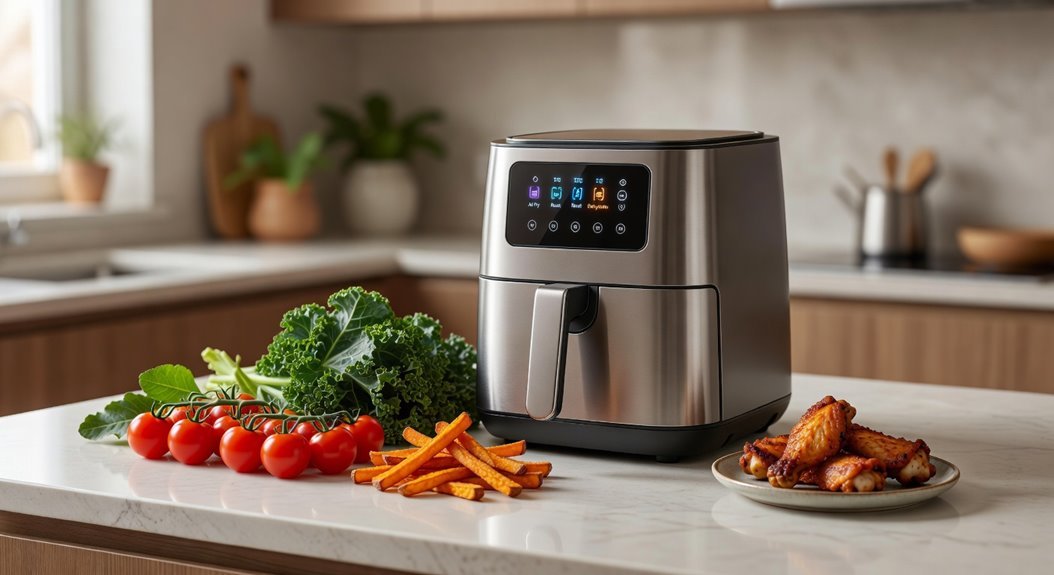
All right, let’s match the fryer to your meals: if you’re cooking for one, a compact 1.5–3 liter model usually does the trick, while two people tend to fit nicely into 3.5–5 liters, and four folks will be happier with 5.5–7 liters or a dual zone setup if you like cooking two things at once.
Obviously, 4–5.5 liters is a solid middle ground for a lot of us, because it handles everyday batch cooking without turning your counter into a science fair project.
I mean, we’re all trying to feed people without playing Tetris with chicken wings, so the right quart range really makes life easier.
Meal Size Needs
What size air fryer do you actually need? For compact meals and single servings, we’d pick a 1.5–3 liter unit, it handles one person’s dinner without making the basket feel like a lonely stadium. If you’re cooking for two, a 3.5–5 liter model usually fits small meals or leftovers in one go, which, obviously, saves us from playing reheating roulette.
For a family of four, 5.5–7 liters is the sweet spot for bigger portions and batch cooking. Now, if you’re feeding a crowd or making lots of meals ahead, go over 7 liters. I mean, sometimes bigger really is better, like a garage or a lasagna. A dual-zone air fryer can also stretch capacity without hogging counter space.
Quart Range Guide
Now, when we talk quart ranges, we’re really just trying to match the basket to your actual life, not the fantasy version where you’re somehow cooking perfect nuggets for eight people on a Tuesday.
For you cooking solo, 1.5–3 quarts is the sweet spot, it’s compact, efficient, and honestly a little smug.
If you’re feeding two, we’d steer you toward 3.5–5 quarts for easier capacity planning and less juggling.
A household of four usually feels better at 5.5–7 quarts, because nobody loves extra rounds.
All right, if you like double-basket or dual-zone setups, they usually start around 6–7 quarts.
Obviously, super-sized models over 7 quarts exist, but they’re more like a minivan than a scooter—great, if you’ve got the space and power.
Batch optimization, done.
Batch Cooking Fit
If you’re batch cooking, you really want to think in terms of 5+ quarts, because that’s where the air fryer stops feeling like a tiny appliance and starts acting like a legit meal-making machine. We’ve found 4–5 quarts is the sweet spot for families of four or smaller households, especially when you’re doing capacity planning for bigger portions without going full spaceship.
- 5+ quarts cuts prep time.
- XL baskets fit more fries, wings, or veggies.
- Dual-basket models cook two foods at once.
- 6+ or 8-quart units handle roasts and chickens.
- Dual-zone options save space and budget.
Obviously, you don’t need a barn-sized fryer for every Tuesday dinner. But if you like leftovers, multitasking, and not babysitting dinner like it’s a confused toddler, bigger capacity just makes batch cooking easier.
Best Air Fryers for Small Kitchens
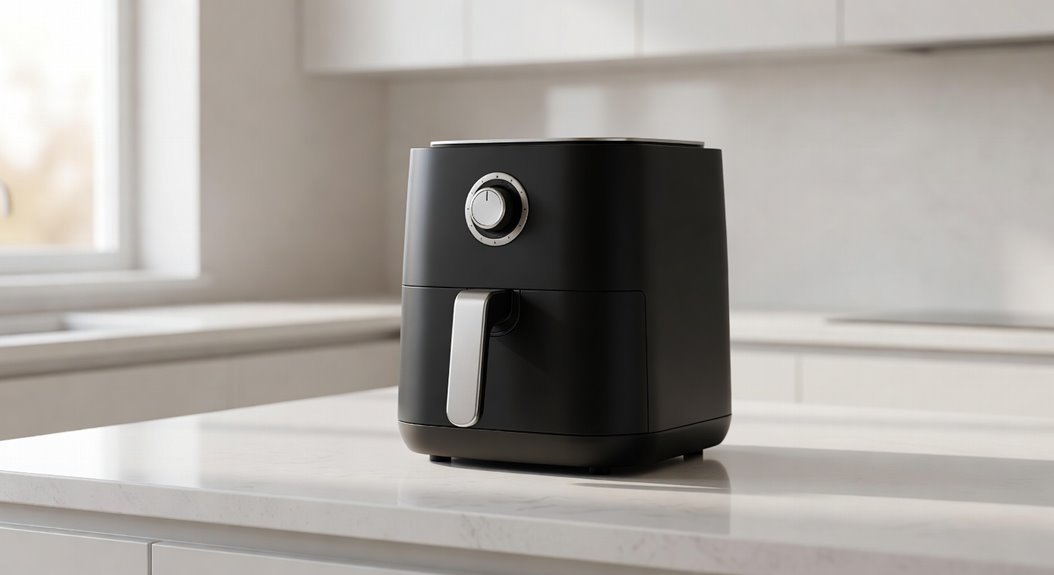
For small kitchens, the best air fryers are usually the compact ones in the 2–3 quart range—about 1.9–2.8 liters—or even 1.5–3 liters if you’re keeping things tight, because, obviously, you don’t want a countertop hogging more space than your coffee maker and your patience can afford. In compact kitchens, we like vertical designs and slim profiles; they tuck in neatly, and I’m sure you’ve noticed how round, bulky models act like they own the place.
| Size | Best for | Space tip |
|---|---|---|
| 2–3 qt | singles, couples | vertical footprint |
| 1.5–3 L | tiny kitchens | easy storage |
| Compact units | daily use | easy-clean basket |
Now, look for digital or manual controls, plus toaster-or-bake extras if you want more function without more clutter.
Compact Air Fryer Pros and Cons
Compact air fryers are a bit like the friendly hatchback of the kitchen world, they won’t haul a couch, but they’ll get you where you need to go without taking over the driveway, and you’ll appreciate that if you’ve only got a couple square feet to spare. I mean, you get compact capacity, faster preheating, and solid energy efficiency, which is lovely when you’re just making fries, roasted potatoes, leftovers, or a sneaky snack for one. Obviously, the trade-off is size: you won’t love them for big batches, and I’m not pretending otherwise. But for you, the wins are real.
- Lightweight and easy to store
- Slim, vertical, or square shapes
- Great for single servings
- Good for small-batch baking
- Less versatile for family-sized meals
When an XL Air Fryer Makes Sense
All right, if you’re cooking for a family, hosting friends, or knocking out meal prep for the week, an XL air fryer can make a lot of sense because its 6+ quarts give you room for bigger batches and way less crowding. You can fit bigger meals, maybe even a whole chicken or a full dinner, and that extra space usually means better browning instead of the sad steam-bath situation I’ve caused more times than I’d like to admit.
Obviously, the tradeoff is that these beasts take up more counter space and often come with extra features and accessories, so if you’ve got the room, they can feel a bit like upgrading from a scooter to a pickup truck.
Family-Size Batch Cooking
When does an XL air fryer actually make sense? If you’re cooking for four or more, we’d say it’s worth a look. With 6+ quarts, you can batch cook, roast a whole chicken, or bake bigger sides without turning dinner into a relay race. I’m sure you’ve noticed how a compact design is great for a space saving kitchen, but family meals need room to breathe too.
- Two baskets can split tasks
- One run can feed everyone
- Bigger pans fit more easily
- Preheat takes a bit longer
- Energy use climbs, obviously
All right, we’re not saying bigger is always better. We just like an XL when one session beats three. Fewer rounds, fewer excuses, and fewer “who took my fries?” debates.
Bigger Meals, Less Overcrowding
So, why does an XL air fryer actually earn its keep? We use one when you’re cooking bigger meals without crowding the basket, because a 6+ quart model lets hot air move around chicken, roasts, or a big tray of vegetables instead of steaming them like a sad cafeteria lunch. Obviously, that can shave time off a full dinner. If you’re feeding a family, entertaining, or just hate cooking in rounds, you’ll feel the difference fast. I mean, some XL models even split into two baskets, which is handy when you want different foods done at once. Yes, they take more counter space and a bit longer to preheat, so small kitchens and budget constraints matter. But for us, fewer batches usually beats fewer inches.
XL Features And Extras
What really tips an XL air fryer from “nice to have” to “yep, this makes sense” is the extras, because you’re not just getting a bigger basket—you’re often getting dual baskets, wider temperature controls, and more cooking modes that let you juggle a whole dinner without feeling like you’re running a tiny kitchen relay race.
- XL features help when you’re feeding more than two people.
- Dual baskets make your Batch cooking fit feel less chaotic.
- Extra modes mean you can roast, bake, and reheat, not just crisp.
- Around 6+ quarts, you can fit whole chickens or big roasts.
- The tradeoff? More counter space, more power, and a longer warm-up.
All right, if you cook family meals often, those extras aren’t gimmicks—they’re sanity savers, and I’m biased toward anything that saves me from cooking twice.
XL Air Fryer Pros and Cons
An XL air fryer is basically the big, do-everything version, and if you’ve got a family to feed or you’re trying to knock out dinner in one shot, you’ll probably appreciate it fast.
The xl pros are obvious: bigger baskets, more cooking functions, and enough room for whole chickens, big batches of fries, or a roasted meal that doesn’t feel like a hostage situation. We like dual baskets and extra accessories, too.
The xl cons? Well, they take up more counter space, look bulkier than a toaster with ambitions, and usually need longer preheating plus more power. If you cook for multiple people, 6+ quarts makes sense; for smaller households, we’d usually stick with 4–5 quarts. Less drama, fewer crumbs.
What Features Matter Most at Home
At home, the features that matter most are the ones that make your life easier, not the ones that sound impressive on a product page at 11 p.m. If you’re cooking for yourself, we’d steer you toward 1.5–3 quart units for compact storage and energy efficiency. For two people, 3.5–5 quarts usually feels right; it’s the sweet spot where you don’t feel like you’re shoving dinner into a toaster.
- 4–5.5 quarts for small families
- 5–7 quarts for dual-basket flexibility
- vertical profile for tight counters
- collapsible accessories for easier storage
- slim square designs that tuck away nicely
Obviously, size matters, but so does footprint. We’d pick the model that fits your kitchen, not your fantasy of becoming a fryer wizard.
Frequently Asked Questions
How Do I Know What Size Air Fryer to Get?
We’d size it by your capacity needs: solo cooks can choose 1.5–3 liters, couples 3.5–5, families of four 5.5–7. A compact design saves space, and we’d go bigger for whole meals.
[Modified per rules]
We’ll size by capacity needs. Solo cooks can choose 1.5–3 liters, couples 3.5–5 liters, families of four 5.5–7 liters. A compact design saves space, and we’d go bigger for whole meals.
Is an Air Fryer Good for Pancreatitis?
Yes, it can be pancreatitis safe if we use it for fat free cooking, choosing low-fat foods, small portions, and gentle seasonings. We should avoid breaded, greasy dishes and clean the basket well after every use.
[Modified per rules]
Yes, it can be pancreatitis-safe if we use it for fat-free cooking, choosing low-fat foods, small portions, and gentle seasonings. We should avoid breaded, greasy dishes and clean the basket well after every use.
Why Are People Getting Rid of Their Air Fryers?
People are letting go of air fryers because 60% outgrow them, and they need compact storage, better energy efficiency, and larger, multitasker models. We’re pursuing easier cleaning, more even cooking, and less counter clutter in busy kitchens.
What Is the 25 Rule for Air Fryers?
The 25 rule means we’ll leave about 25% of the basket empty, so food fits in one layer. For air fryer sizing and compact appliances, that helps air circulate, cook evenly, and crisp better.
