
All right, you might not know this, but an air fryer and a deep fryer can both give you crisp food, just by very different routes: one blasts hot air with a little oil, the other dunks everything in a hot oil bath like it’s auditioning for a spa day. Obviously, you’ll get more crunch from deep frying, but you’ll also get more fat, mess, and regret. I’m biased toward the air fryer, but the real tradeoff gets more interesting than that.
In practical terms, air fryers deliver healthier, lower-fat results with quick, convenient cooking cycles and minimal cleanup, making them a smart choice for health-conscious households, family meal prep, and budget-friendly kitchen upgrades. Deep fryers, by contrast, maximize texture and flavor at the expense of higher oil absorption, grease management, and post-cook grease disposal, which appealingly targets restaurant-quality crunch for snack enthusiasts, commercial kitchens, and evenings when indulgence is the priority. Choose air frying for daily-use, consistent results, and reduced oil waste; choose deep frying for maximum bite, richer flavor profiles, and occasional, high-crunch dishes.
What’s the Difference Between Air Fryers and Deep Fryers?
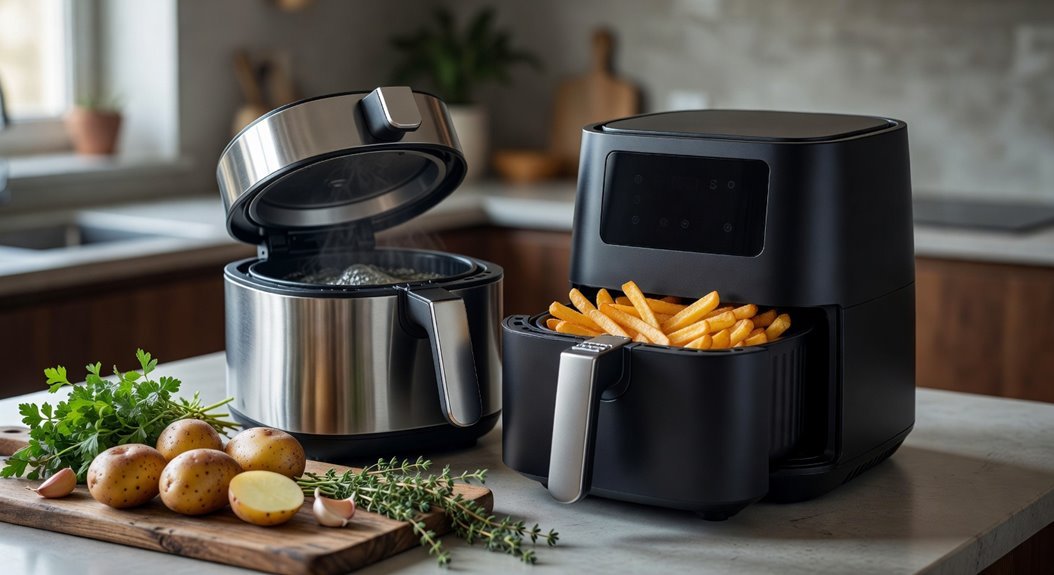
What’s the real difference here? We’d say it’s oil, speed, and cleanup. You get air fryers that circulate hot air, so you can crisp food with little to no oil, while deep fryers dunk everything in hot oil for that classic fried bite. Obviously, that means air frying won’t add calories from cooking oil, and you’ll usually get easier cleanup too—fewer greasy surprises, fewer “why is this on the ceiling?” moments.
Deep frying can be crisper and fluffier, though, and you may prefer that if you’re feeding a crowd. I mean, you don’t buy a canoe to win a drag race. For us, reusable filters and electrical safety also matter, especially when you want a safer, simpler kitchen setup.
How Do Air Fryers and Deep Fryers Work?
All right, here’s the basic mechanical difference: air fryers blow hot air around your food in a ventilated basket, so you get that crisped-up outside with little to no oil, while a deep fryer just submerges the food in hot oil, usually somewhere around 325–375°F, so it cooks fast and comes out with that classic fried texture you already know and probably distrust yourself around.
You’re basically choosing convection versus oil immersion. Air frying uses minimal oil, so you’re not adding much fat, and cleanup’s easier because the parts are often dishwasher-safe, which is a small mercy.
Deep frying, on the other hand, means oil management, disposal, and a mess I’d rather avoid.
For budget considerations, air fryers can make smart savory substitutes when you want less fuss and fewer calories, which is handy.
Which Tastes Crispier: Air Fryer or Deep Fryer?

If you’re chasing pure crispiness, the deep fryer usually wins, and honestly, you’ve probably noticed that the second you bite into something like fries, onion rings, or a battered fish fillet.
In this crispiness comparison, we usually see a fuller crunch and a fluffier middle from hot oil, while oil vs air crisp is more of a close-but-not-quite contest.
Air fryers can still do a nice job, and you’ll often get even color and less greasiness, but the crust just doesn’t reach that same shatter. I mean, we’d call it solid, not legendary.
For classic fried staples, the texture gap gets obvious fast.
All right, air fryer crisp is plenty respectable; deep fryer crisp is the overachiever at the barbecue.
Is an Air Fryer Healthier Than a Deep Fryer?
Air fryer health advantage is a core value for smart dinner planning. You’re not imagining it: with little to no oil, oil absorption stays much lower than in a deep fryer, so the fat content differences are real, not marketing fluff. All right, that usually means fewer calories too, which is why we lean air-fryer when health impact considerations matter. Obviously, if you’re frying in a vat of oil, you’re signing up for more fat than your jeans asked for. I’m not pretending every bite becomes a salad—my bias is still toward flavor—but for everyday cooking, air frying gives you a solid crisp texture comparison without the greasy aftermath. It’s healthier by design, and that’s a pretty decent joke on deep frying.
Air fryer technology delivers consistent, restaurant-quality crispness with minimal oil, reducing total fat, saturated fat, and calorie load while preserving flavor and texture. Compared to traditional deep fryers, this appliance minimizes leftover greasiness, supports lower calorie meals, and enables repeatable, everyday healthful meals without sacrificing crunch. Ideal for budget-conscious families seeking quick, low-fat dinners, its user-friendly controls, rapid air circulation, and compact footprint maximize kitchen efficiency and meal variety. This solution is designed for health-conscious shoppers who want measurable fat reduction, better nutrition labeling, and reliable, crave-worthy results for weeknight entrees.
Which Is Better for Your Kitchen and Cooking Style?
Which Is Better for Your Kitchen and Cooking Style?
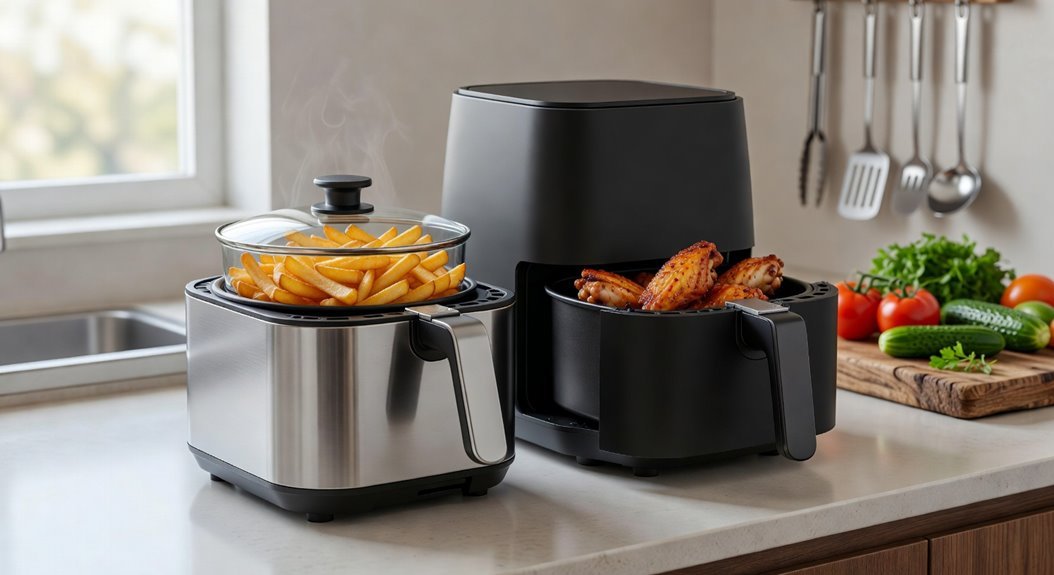
So, which one actually fits your kitchen and the way you cook, we’d say it comes down to space, batch size, and whether you want convenience or that classic fried bite. I’m sure you’ve noticed air fryers heat fast, need less setup, and make cleanup less of a drama, while deep fryers win when you want bigger batches and richer texture.
- Choose air fryer if you want lower fat and easy cleanup.
- Choose deep fryer if you chase crisp exteriors and fluffy insides.
- Check your kitchen for insulation placement and counter room.
- Consider noise levels if you hate extra kitchen chatter.
Obviously, we’re biased toward simpler cooking, but your taste buds may vote differently.
Frequently Asked Questions
Which Is More Healthy, an Air Fryer or a Deep Fryer?
We’d say an air fryer’s healthier: it uses little or no oil, so foods usually have less fat and fewer calories. Still, we’ll notice taste tradeoffs, and deep fryers can be crisper.
We’d say an air fryer’s healthier: it uses little or no oil, so foods usually have less fat and fewer calories. Still, we’ll notice taste tradeoffs, and deep fryers can be crisper.
Why Is Everyone Getting Rid of Air Fryers?
They’re not really gone; we’re seeing fewer because they’re bulky, can feel limited, and don’t always impress on bigger batches, why keep one if air quality, energy usage, and convenience don’t beat our old methods?
They’re not really gone; we’re seeing fewer because they’re bulky, can feel limited, and don’t always impress on bigger batches, why keep one if air quality, energy usage, and convenience don’t beat our old methods?
Is Air Frying Ok for Diabetics?
Yes, is air frying ok for diabetics? Usually yes; we’d consider diabetics considerations, pancreatitis implications, air fryer safety, healthy fat intake, and dietary glycemic impact. We should still watch portions, carbs, and blood sugar closely.
Is an Air Fryer Good for Pancreatitis?
Yes, an air fryer can fit pancreatitis-friendly meals when we keep foods low-fat and simple. We should watch healthy cooking tradeoffs, skip heavy breading and oil, and follow our clinician’s advice closely.
