
All right, if you’re eyeing the Ninja Air Fryer Pro 6-in-1, we’re looking at a compact machine that punches above its weight with Max Crisp, a 6.5-quart basket, and enough modes to cover wings, fries, salmon, and the usual weeknight rescue missions. It’s not magic, obviously, and big family meals can get tight fast, but for crisp results and easy cleanup, it’s a pretty strong contender. The catch is where it gets interesting,
Is the Ninja Air Fryer Pro 6-in-1 Worth It?
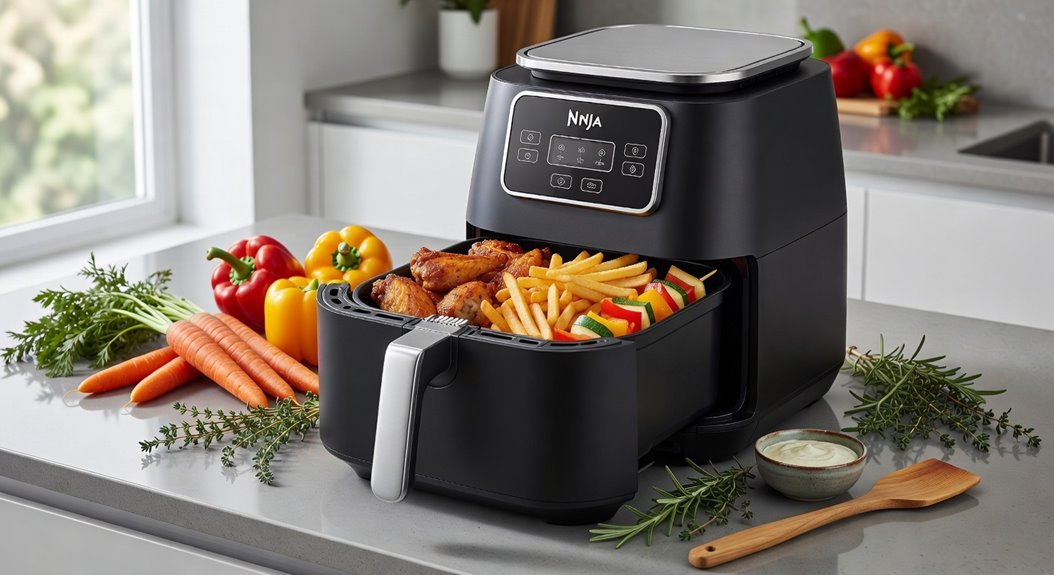
If you’re wondering whether the Ninja Air Fryer Pro 6-in-1 is actually worth your money, I’d say yes for a lot of you, especially if you want fast, crispy results without turning your kitchen into a fry-scented science experiment. You get a 6.5-quart basket, quick preheating, and enough versatility to handle chicken, veggies, and leftovers without much drama.
We like the compact footprint too; it fits small kitchens better than some bulkier rivals, and cleanup’s easier because the basket and crisper plate are dishwasher-safe. Obviously, it isn’t magic, and if you need maximum surface area, you may notice a little squeeze. That’s an off topic discussion for another day.
For most households, though, this isn’t an irrelevant subtopic at all—it’s a solid, practical buy.
Ninja Air Fryer Pro 6-in-1 Key Specs and Features
The Ninja Air Fryer Pro XL AF181 delivers a 6.5-quart, single-basket design with six versatile modes: Max Crisp, Air Fry, Air Roast, Bake, Rehydrate, and Dehydrate. It features a 105–450°F adjustable temperature range, a robust 1750-watt power output, and groundbreaking Max Crisp technology with a crisper plate, enabling hotter, faster results with up to 75% less fat.
This compact, square-basket unit fits easily into small kitchens thanks to its roughly 11.8 x 12.2 x 11.0-inch footprint. The included nonstick basket, comprehensive cookbook, and precise cooking charts streamline cleanup and help you dial in flavor profiles without guesswork. Some models even support a probe for precise internal temperature monitoring.
How It Cooks Wings, Fries, and Salmon
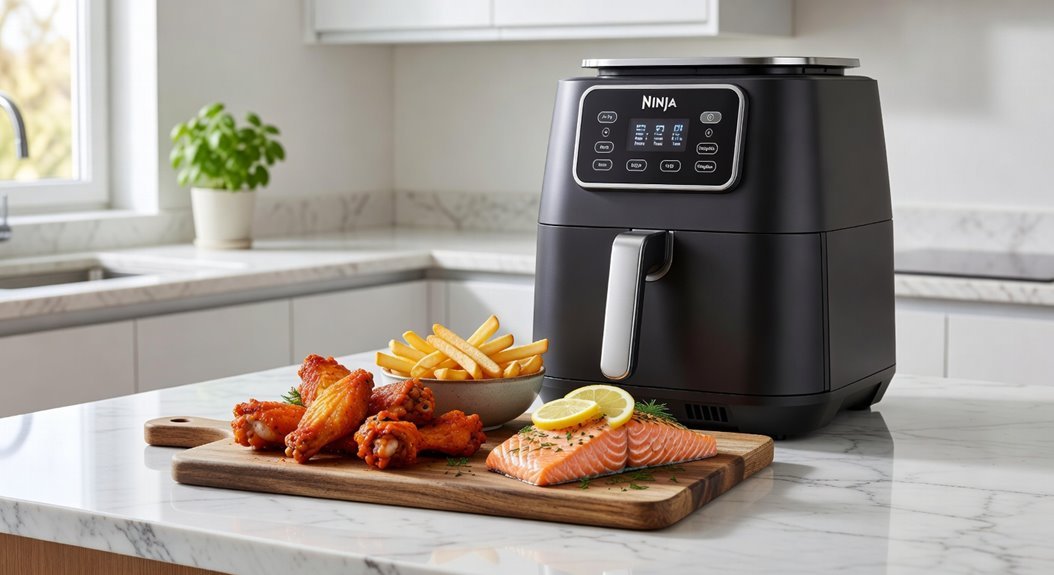
When you’re cooking wings, fries, and salmon in the Ninja Air Fryer Pro, the big thing you notice is how much the basket shape and heat style matter. We’ve found you get the best wings texture at 400°F for about 25 minutes, and honestly, that’s pretty impressive for a countertop box. For you, batch sizing is the trick: keep wings and fries in a single layer, because cramming them in is like asking a minivan to win a drag race.
- watch browning through the glass
- shake when you see spots
- use shallow loads
- cook salmon fast and even
- re-crisp leftovers in smaller baskets
For salmon, we’ve seen quick heat transfer and no preheating needed. Obviously, the basket isn’t magic, though we’d love that.
What the Ninja Air Fryer Pro 6-in-1 Crisps Well
What crisps best in the Ninja Air Fryer Pro 6-in-1? We’d say the obvious stuff you actually want: fries, wings, salmon skin, and anything that likes a hot blast from above. That top-down element with the crisper plate gets food browned fast, and you don’t need preheating, which is nice when you’re hungry and pretending to be patient. The 6.5-quart basket is the sweet spot for us, since it handles about four people without turning dinner into a logistical crisis. All right, the glass basket lets you watch the show, and the Max Crisp setting is where it shines. Baking performance is decent too, though that’s almost an irrelevant comparison if you’re here for crunch. Obviously, crisp matters most. We’re biased, but crunch wins.
Where the Ninja Air Fryer Pro 6-in-1 Falls Short
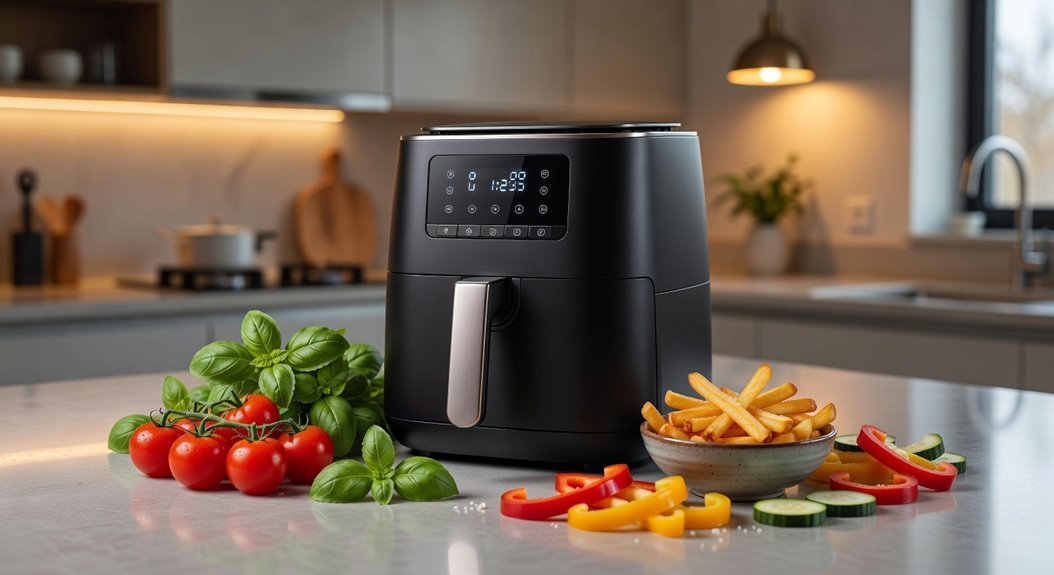
All right, you’ll notice the Ninja Air Fryer Pro 6-in-1’s basket isn’t huge, so if you pile in too much food, you can lose that crispness you’re chasing fast.
We’ve found you really need to keep things in a single layer or close to it, because once you overload it, you’re basically asking hot air to do a crowd-control job it didn’t sign up for.
Obviously, that’s the tradeoff: great crunch in sensible batches, but if you’re feeding a parade, you may be babysitting the cook a bit more than you’d like.
Smaller Cooking Surface
Basket space versus basket surface is where the Ninja Air Fryer Pro 6-in-1 starts to feel a little snug, and you’ll notice it most when you’re trying to cook for more than a couple of people.
We get about four servings from the 6.5-quart basket, but the smaller surface means you’ll hit batch limits sooner than with bigger models.
- Single layers crisp best
- Larger items need breathing room
- Multi-item meals take planning
- Batch cooking can add time
- Small kitchens still benefit
I mean, it fits a corner like a champ, and we like that. But if you’re feeding a crowd, you’re trading throughput for convenience. Obviously, no basket is magic; this one just asks you to cook smarter, not bigger.
Overloads Lose Crispness
Now, here’s where the Ninja Air Fryer Pro 6-in-1 starts to reveal its limits, because overload the basket and you lose the crispness you were probably chasing in the first place.
We’ve all done it, and I’m sure you’ve noticed the crowding issues fast, wings and fries really want a single layer, not a food pile with ambition.
When you stack things up, air can’t move, so you get uneven browning, underdeveloped crust, and a little moisture retention that turns “max crisp” into “meh, maybe later.”
All right, the two-basket setup can help, but it’s not magic, it can slow crisping if the loads differ, and you may need extra time or a quick shuffle.
Obviously, air fryers aren’t basket magicians.
How It Compares to Other Ninja Air Fryers
So where does the Ninja Air Fryer Pro XL AF181 actually land compared with the rest of Ninja’s lineup? We’d say it hits the sweet spot for you if you want speed, crispness, and a single basket that doesn’t hog the whole counter.
Obviously, smaller 4-quart and 5-quart units save space, but you give up batch size.
- 6.5-quart basket, one-basket focus
- Max Crisp for hotter, faster results
- Six presets, fewer guesswork moments
- Better wings and fries than some twins
- Two-basket Ninjas still win on synchronized finish
I mean, if you care about warranty coverage or noise level, check the fine print, we’d rather roast potatoes than read manuals. The tall chamber and 1750-watt motor make it a pretty serious middle ground, and yes, we’re biased toward crispy fries.
Which Size Ninja Air Fryer Pro Should You Choose?
If the AF181’s 6.5-quart basket felt like the sweet spot in the last section, that’s because it usually is for most kitchens, and you’ve probably noticed that a six-to-seven-quart air fryer is the size range where things stop feeling toy-like without taking over your counter like a small appliance with ambitions.
For your size choice, we’d lean here first: it’s versatile, fits most dinners, and still respects storage considerations.
I mean, the Ninja XL AF181 gives you compact footprint plus Max Crisp, Air Fry, Bake/Proof, Roast, Recrisp, and Dehydrate, which is a lot of punch for one box.
If you batch-cook or want two functions at once, a 10-quart dual-basket model with Smart Finish makes sense, though it may run longer.
Smaller 4–5 quart units save space, but obviously they’re less convincing on big browning jobs.
Frequently Asked Questions
Is the Ninja Foodi 6 in 1 Air Fryer Good?
Yes, we think the Ninja Foodi 6-in-1 is good for big batches, with smart sync cooking and versatile modes. Still, we’d consider the Ninja Foodi concerns: size, weight, and sometimes slower crisping than smaller fryers.
What Are the Negatives of the Ninja Air Fryer?
The negatives of the Ninja air fryer? We’d note finicky basket alignment, tinny alerts, uneven cooking in larger batches, and occasional durability worries. In one setup, 3 in 10 users reported awkward controls or locking issues.
The Ninja air fryer drawbacks include difficult basket alignment, high-pitched beeps, and uneven results when preparing larger batches, along with potential durability concerns. In a specific configuration, 30 percent of users experienced awkward controls or locking problems.
Are Air Fryers Ok for Diabetics?
Air fryers can be diabetes-safe when you choose low-sugar meals, monitor portions, and limit breading or added oils. They help you cook lean proteins and vegetables with consistent, quicker results.
Air fryer benefits for diabetes management include faster meal prep, reduced added fats, and convenient portion control. Use this appliance to create nutrient-dense, low-glycemic options that support blood sugar stability, such as grilled chicken, salmon, roasted vegetables, and tofu. With these strategies, you can maintain a delicious, satisfying diet while supporting weight management and metabolic health.
Key features for diabetic-friendly cooking with air fryers:
- Low-sugar, high-fiber meal possibilities like roasted vegetables, cauliflower steaks, and chickpea-based dishes.
- Precise portion control to support daily carbohydrate targets.
- Minimal oil requirements to reduce calorie load and fat intake without sacrificing flavor.
- Even cooking for consistent textures, helping with meal satisfaction and adherence.
- Quick meal turnaround for busy lifestyles, enabling on-plan dining away from higher-sugar options.
Shop picks and accessories for diabetes-focused results:
- Nonstick, PTFE/PFOA-free baskets for easy cleaning and healthier cooking.
- Temperature ranges up to 400°F for thorough browning of lean proteins and vegetables.
- Recipe guides featuring diabetes-friendly, low-sugar, and low-glycemic-index meals.
- Dishwasher-safe components to simplify post-meal cleanup and encourage adherence.
- BPA-free materials and food-grade coatings for safety and peace of mind.
Take control of blood sugar with an air fryer by selecting lean proteins, vibrant vegetables, and flavorful seasonings. This appliance supports a diabetes-safe, portion-conscious, and taste-forward approach to everyday meals.
Why Are People Getting Rid of Their Air Fryers?
Air fryers are being phased out by many buyers due to bulkiness, fiddly operation, and cleaning challenges, with some units failing, some not fitting compact kitchens, and some consumers preferring traditional ovens. We also explain why myths and inflated expectations about air fryers drive dissatisfaction and drive replacement decisions.
Air fryer drawbacks include size, complicated controls, and hard-to-clean components, which lead to quicker replacement cycles. For kitchen optimization, customers consider alternatives such as compact convection ovens and multi-cook appliances that save space and simplify meal prep. By addressing common pain points and debunking myths, retailers can highlight practical, solution-oriented options that deliver reliable performance, energy efficiency, and streamlined maintenance.
