
Like a Swiss Army knife that can also crisp fries, a microwave-and-air-fryer combo sounds clever because, well, it usually is. We’re talking about one box doing microwave speed, convection baking, broiling, and air-fried crunch, but you’ll want to check capacity, wattage, accessories, and cleanup before you get seduced by the label. Obviously, not every combo is equal, and I’m partial to the ones that actually brown food instead of just pretending. Let’s see which ones earn counter space and which ones are just expensive toast.
Best Microwave Air Fryer Combos
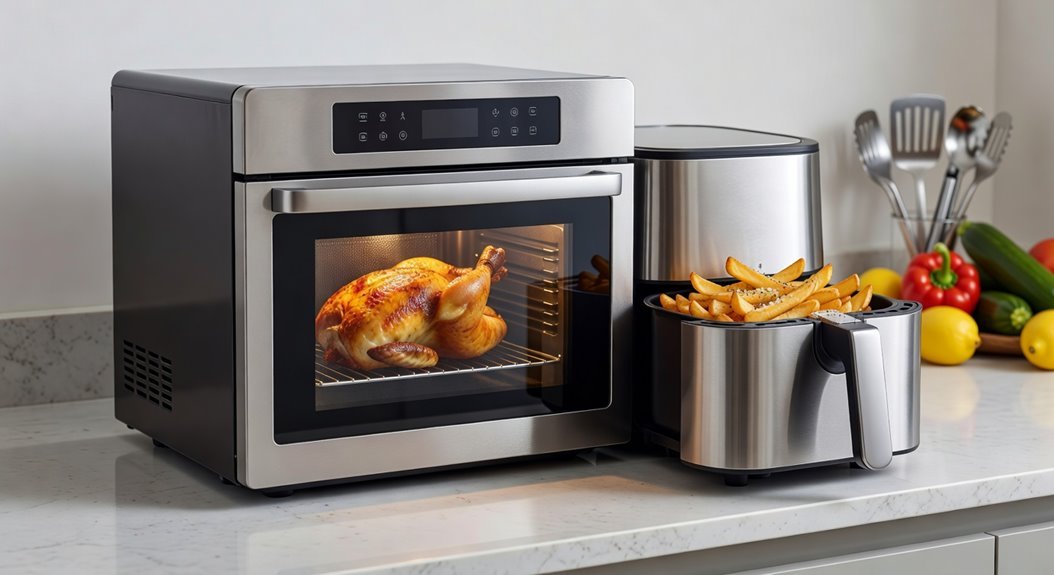
So, which microwave air fryer combo actually deserves space on your counter? We’d start with Panasonic’s HomeChef 4-in-1, because you get microwave, broiler, convection, and air fryer power, plus Inverter Technology and app presets. If you want value, GE’s 4-in-1 lands around $229 and still fries well. Toshiba’s 7-in-1 is the Swiss Army knife, with even heat and lots of modes, while Breville’s Combi Wave nails crispy wings and moist cake in one go. For over-the-range setups, KitchenAid adds hood ventilation and an air fry basket.
Obviously, your design aesthetics matter, but so does energy efficiency. We’d pick based on your kitchen, not our ego, mine’s already losing the fight with my coffee maker.
How We Test Microwave Air Fryer Combos
All right, we test nine microwave air fryer combos by checking microwave performance first, ensuring even heating on cheese, casseroles, and dinner plates, plus preset features like popcorn pop quality and defrosting ground beef and another shape I don’t recall perfectly.
Then we push air fry and bake modes with bread, a 9-inch cake, and chicken wings, because crisp edges matter for appealing results, not burnt or beige outcomes; if you’ve ever scraped burnt toast, you know the stakes.
Finally, we judge ease of use and cleanup by evaluating the control panel, door, interior, and accessories, since you shouldn’t need a PhD—or a dish crew—to operate your own appliance.
In our comprehensive testing protocol, we assess performance metrics, reliability, and user experience for nine microwave air fryer combos, focusing on practical everyday cooking scenarios.
Our evaluation emphasizes commercial-grade relevance, highlighting how these units perform under real-world load, with a solution-focused lens on delivering consistent, restaurant-like results at home.
Microwave Performance Tests
How do we actually judge whether a microwave air fryer combo is any good? We put it through microwave performance tests that tell you more than a shiny display ever will. You care about microwave efficiency and sensor accuracy, so we do too, because nobody wants dinner half-hot and half-scary.
- We heat standard plates and casseroles for evenness.
- We melt cheese and reheat mac and cheese.
- We warm a meatloaf plate to check consistency.
- We test popcorn pop quality and defrosting with two beef shapes.
All right, if a combo can’t handle those basics, it’s bluffing like a poker player in a windstorm. Obviously, we’re looking for steady heat, not culinary roulette. We’re picky, maybe annoyingly so, but that’s the point: you get the truth, not appliance marketing glitter.
Air Fry And Bake
When it comes to air fry and bake, we’re not just pressing a button and hoping for the best, because you’ll notice pretty quickly whether a microwave combo can actually turn out crisp wings, browned bread, and a decent 9-inch cake or just make everything look vaguely ambitious. All right, here’s how we test it:
| Test | What we watch | Why it matters |
|---|---|---|
| Wings | Crispiness | Real air fry |
| Bread | Browning | Even heat |
| Cake | Moisture | Bake quality |
| Modes | Integration | Bake versatility |
| Overall | Versatility | Kitchen payoff |
Obviously, wings tell us if the air fry mode’s got backbone. Bread and cake show whether heat spreads evenly and keeps moisture where it belongs. Then we see how these modes play with microwave and convection presets, because you need bake versatility, not a lonely party trick. I mean, you’re buying a combo, not a one-note toaster with delusions.
Ease Of Use Cleanup
So, what makes a microwave air fryer combo actually pleasant to live with? We look at accessible controls, a sensible door, and an interior you can navigate without performing kitchen yoga. Then we test ease of cleaning by checking smooth walls, nonstick or easy-clean surfaces, and whether trays rinse off like they’ve got somewhere better to be.
- Shortcuts and one-touch presets you’ll actually use
- How fast you can switch microwave, air fry, and convection modes
- App integration that doesn’t feel like a punishment
- Dishwasher-safe parts and those annoying little crevices
All right, you want gear that won’t make you regret dinner. We’re pretty biased toward simple cleanup, because scrubbing grease is nobody’s love language, and if the appliance fights you, that’s a hard pass.
What to Look for in a Microwave Air Fryer Combo
If you’re shopping for a microwave air fryer combo, the first thing you’ll want to look at is the type, because countertop, over-the-range, and built-in models each come with their own installation headaches and happy surprises. We’d also check capacity next: around 1.2 cubic feet is common, though you’ll see about 0.8 to 2.2 cu ft, and you don’t want a turkey breast playing Tetris with your dinner. Aim for at least 1,000 watts, since power matters more than our optimism. Then we’d scan the settings—air fry, convection, broil, grill, and sensor cooking—because automatic adjustments are like having a tiny sous-chef. Irrelevant discussion 1. Irrelevant discussion 2. Finally, look for accessories like baskets, turntables, nonstick interiors, and easy-clean surfaces, because nobody enjoys scrubbing burnt cheese at 9 p.m.
Are Microwave Air Fryer Combos Worth Buying?
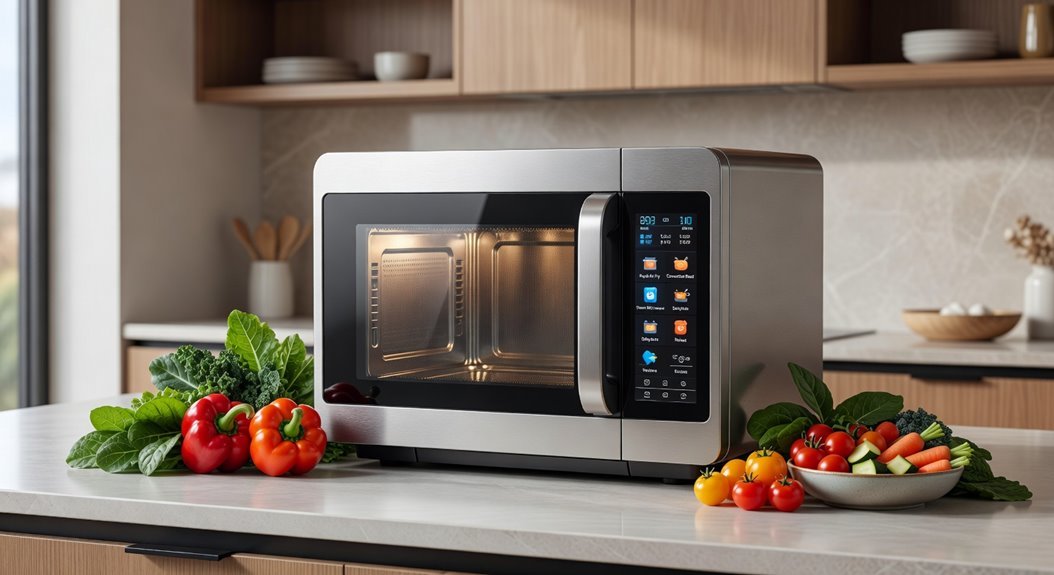
Absolutely, microwave air fryer combos can be worth buying, you just need to know what you’re getting. We’d say yes if you want one box that saves counter space and still handles weeknight chaos, you know, the stuff you actually cook.
- Quick crispy wings and toast, yep.
- 1,000+ watts and around 1.2 cu ft, handy.
- Smart Cook, Smart Reheat, and easy controls, nice.
- Dedicated air fry and convection functions, best chance at solid results.
All right, models like Panasonic HomeChef show the point, they can heat thoroughly, crisp well, and keep life simple. Obviously, an off topic comparison or irrelevant topic won’t help when you’re hungry. We’re biased toward convenience, but not every model’s a champ. Still, if you want flexible cooking without juggling appliances, these combos can earn their keep.
Air Fryer Microwave vs. Convection Microwave: What’s the Difference?
All right, you’ll notice an air fryer microwave uses fast, high-velocity hot air to crisp up fries and wings, while a convection microwave leans on a fan and heating element to brown food more evenly. If you’ve got a combo model, you may get both modes, and honestly, we’d use air fry for snacky, crunchy stuff and convection for roasts or cakes—because obviously not every setting should try to be the hero.
Air Fryer Function
So what’s the real difference between an air fryer microwave and a convection microwave? We use air fryer mode when you want crisper results, because it pushes hotter air faster with stronger air circulation, and yes, the browning differences show up quickly on fries or wings.
- Air Fry mode is built for crunch.
- Convection mode leans toward even browning.
- Some combos give you both settings.
- A perforated tray helps air move.
Now, you might cook wings in air fry and a 9-inch cake in convection, which is a pretty obvious clue that the goals aren’t the same. True air-frying usually feels more intense than convection-only cooking, and we’d pick it when you want that “fried” edge without pretending physics doesn’t exist.
Convection Function
Now that we’ve talked about air fryer mode and that extra-crispy, quick-browning behavior, it helps to look at convection, because a convection microwave is playing a slightly different game. You’ve got a built-in fan and heating element moving hot air around, so your bakes come out more even, and the moisture impact is usually gentler than you’d expect. I’m sure you’ve noticed that convection nuances matter: cakes, casseroles, and roasted vegetables can stay moister inside while still browning nicely outside. Now, some combo units let you choose convection bake, air fry, or a Fast Combi setting, which is a little like having a blender, mixer, and questionable optimism all in one box. Obviously, if you care more about even baking than fry-shop crunch, convection’s your friend.
Key Differences
What’s the real difference, you ask? We’d say it’s speed versus precision. An air fryer microwave uses a bigger, faster fan to chase crispiness, so you’ll notice it on wings and fries; a convection microwave leans on steady airflow for even browning and baking, like a 9-inch cake that actually behaves. Obviously, both can reheat and cook, but you’ll want the right accessory—a basket for true air frying, a perforated sheet for convection.
- Air fry = crisp edges
- Convection = even heat
- Energy efficiency can differ
- Noise levels may vary
I mean, if you want crunchy snacks, we’re team air fry; if you want cake without drama, convection’s your friend. Use the mode, follow the guidelines, and don’t overcook dinner like we did once.
How the Top Models Compare
How do these top combo appliances actually stack up, we’d say it comes down to your cooking style, your space, and yes, those reliability ratings and energy efficiency numbers you keep checking like they’re baseball stats. Panasonic’s HomeChef 4-in-1 feels the smartest, with Inverter Technology, Power Smoothing, and 9 presets for multi-stage cooking.
GE’s 4-in-1 is the bargain play, you get a roomy 1.2+ cu ft interior and solid air frying for about $229.
Toshiba’s 7-in-1 is the Swiss Army knife, plain and simple, with sensors that adjust heat for you.
Breville’s Combi Wave shines if you bake and air fry a lot.
KitchenAid wins when you need over-the-range ventilation and no-turntable convenience.
We’d pick based on your kitchen, not the hype.
Frequently Asked Questions
Is an Air Fryer Good for Diabetics?
Yes, an air fryer can help air fryer diabetics with healthy cooking by using less oil and supporting portion control. We’d still watch carbs, pair meals with protein and fiber, and check labels.
Why Are People Getting Rid of Their Air Fryers?
We’re getting rid of air fryers because of inconsistent usage and redundant features; many of us prefer one combo appliance that crisps, bakes, and reheats faster, saving counter space and simplifying weeknight cooking.
We’re focusing on a single, versatile kitchen solution that delivers crisp results, quick bake times, and efficient reheating, reducing clutter and enhancing everyday meals with a high-performance all-in-one device. This streamlined approach targets busy households seeking reliable, space-saving technology that replaces multiple gadgets with one premium, feature-rich countertop solution.
What Are the Disadvantages of a Microwave Oven Combo?
Disadvantages? We face drawbacks in complexity, limited capacity, slower cooking, and cleanup concerns. We may lose turntables, get inconsistent results, and pay more for bulky units that can need extra accessories or installation.
Disadvantages? We face drawbacks in complexity, limited capacity, slower cooking, and cleanup concerns. We may lose turntables, get inconsistent results, and pay more for bulky units that can need extra accessories or installation.
What Is the Best Air Fryer Microwave Combo?
We’d pick the Panasonic HomeChef 4-in-1 for its Smart cooking, energy efficiency, and reliable cooking presets. If you’re watching countertop footprint and value, the GE 4-in-1’s a strong runner-up for everyday versatility.